9. Recommended Plan of Projects

9. Recommended Plan of Projects
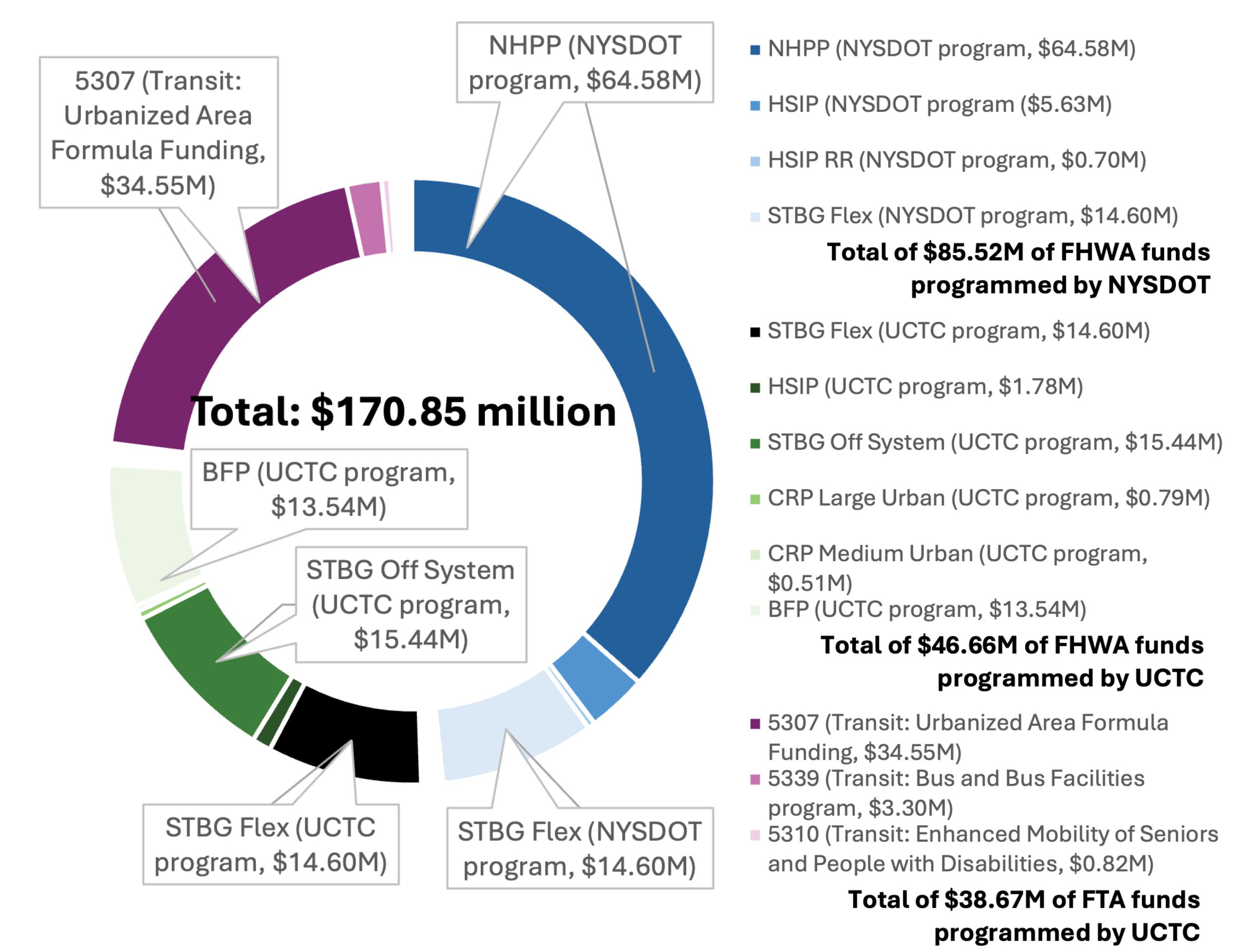
The Recommended Plan of Projects identified in the following pages is directly linked to the UCTC’s FFY 2026-2030 Transportation Improvement Program (TIP), to take effect on October 1, 2025. The TIP includes a priority list of proposed federal and state supported projects to be implemented after the initial adoption of the TIP. A detailed financial summary is provided in each iteration of the TIP. As shown in Figure 9.1, the UCTC 2026 TIP included over $170 million in federal aid to the Ulster County Metropolitan Planning Area over the five-year TIP period.
Short and Medium Range Recommended Plan of Projects
The Recommended Plan of Projects has been prioritized based on need and the level of funding reasonably expected to be available into the future. Projects currently programmed on the TIP with phases underway/obligated are included as “Short Range” projects. Short Range projects are those where construction phases are expected to be initiated or substantially completed during the 2026 – 2030 TIP cycle; these have a high likelihood of execution and completion. Projects that are currently programmed on the TIP but have not yet commenced or made significant progress toward design approval are typically included in the “Mid Range” project listing. While the previous 2045 iteration of the UCTC LRTP omitted a mid-range plan of projects, the 2050 iteration has several Mid Range projects which were programmed in the new 2026 TIP. Projects included in this listing will very likely commence engineering and design within the next 5 years, but the construction phase is not scheduled until 2030 or beyond. Projects of this type may have trouble getting to the final construction phase in 5 years.
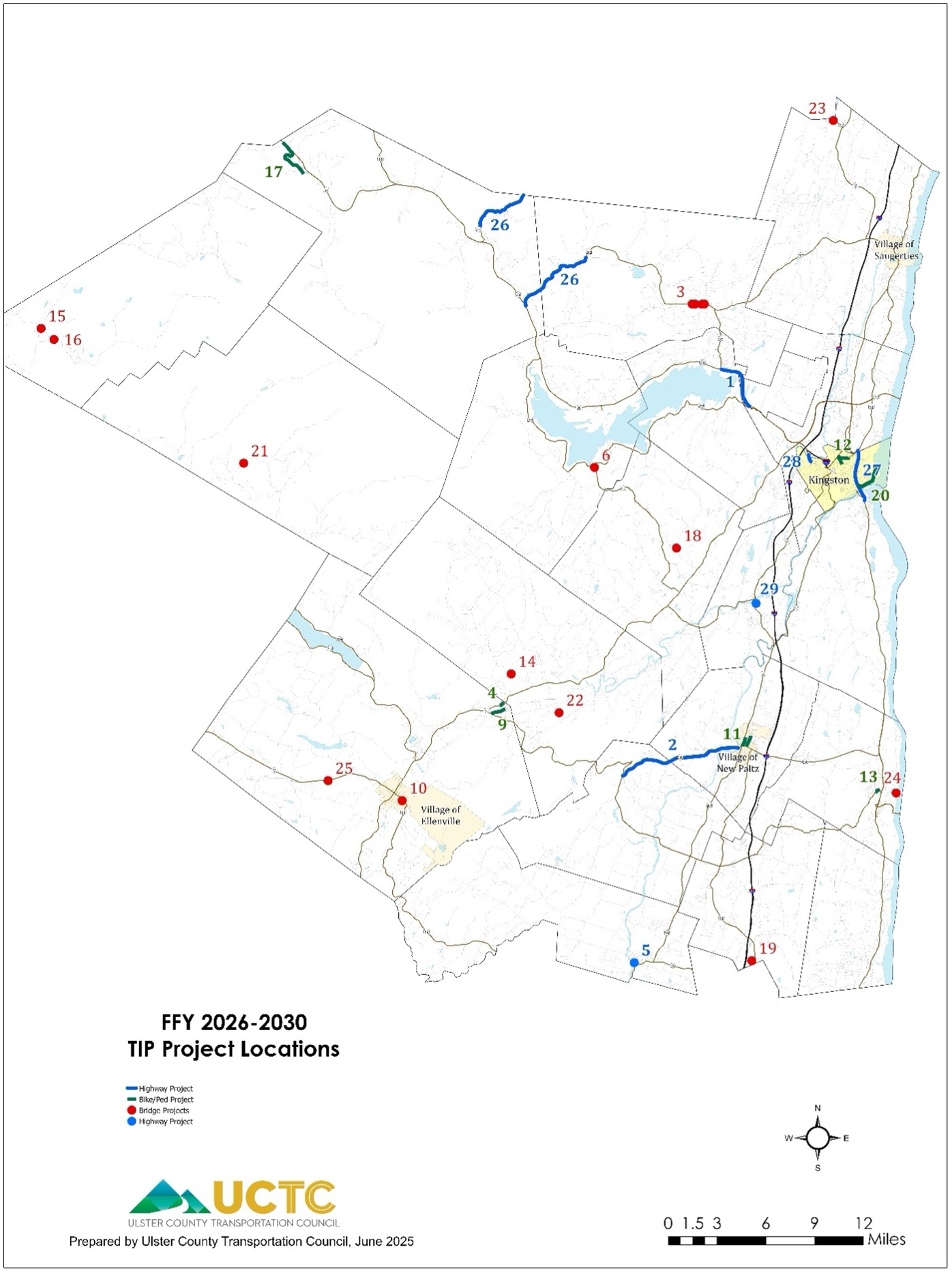
Table 9.1: List of 2026-2030 Transportation Improvement Program, State and Local Highway, Bridge and Trail Projects (referenced on Figure 9.2)
Short-Range UCTC Projects (Construction Obligation Anticipated <2030) | |||
Map Reference | PIN | Project Name | Location |
1 | 801850 | Resurfacing Rte 28 From Waughkonk Rd to Rte 375 | T/Ulster, Kingston, Hurley, Woodstock |
2 | 805111 | County Route 7&8-Route299 Roadway Repaving | T/New Paltz Gardiner |
3 | 812220 | Route 212 Woodstock Bridge Replacements | T/Woodstock |
4 | 817747 | Route 209 Sidewalk Improvement | T/Wawarsing |
6 | 875713 | Route 213 Extension (CR4) Tongore Bridge Rep Bin#30 | T/Olive |
9 | 875925 | D&H Canal/O&W RR Trail | T/Wawarsing |
10 | 875927 | Clinton Ave/North Gully Bridge Rehab. Bin#2262980 | V/Ellenville |
11 | 876122 | Construct New Sidewalks and Curbing Prospect and Church Streets; Replace Deteriorated Bluestone Sidewalk Huguenot St Flatbush and Foxhall Ave Accessibility Improvements Highland Streetscape Improvements | V/New Paltz |
12 | 876254 | Flatbush and Foxhall Ave Accessibility Improvements | C/Kingston |
13 | 876255 | Highland Streetscape Improvements | T/Lloyd |
14 | 876264 | Boice Mill Road Bridge Replacement BIN 2224460 | T/Rochester |
15 | 876268 | Turnwood Bridge Replacement CR54 BIN 3347160 | T/Hardenburgh |
16 | 876280 | Beaver Kill Rd/Scudder Brook Bridge Replacement | T/Hardenburgh |
17 | 876289 | U&D Phase 1 2.5 mi Multi-use Path Highmount to Belleayre Beach | T/Shandaken |
18 | 876312 | Hurley Mntn Rd Over Esopus Creek Bridge Replacement BIN 3347260 | T/Marbletown |
19 | 876313 | Old Mill Rd Over Quassaic Creek Culvert Conversion to Bridge | T/Plattekill |
21 | 876357 | Denning Rd Bridge Over Neversink River Bridge Replacement BIN 3347470 | T/Denning |
22 | 876358 | Project 32 Road Over Stoney Kill Bridge Rehab BIN 2224520 | T/Rochester |
26 | 881620 | Slope Repair Rte 212 and 214 | T/Shandaken, Woodstock |
27 | 881651 | Resurface Segments 9W Between Canal St and Rte 32 Skid Reduction | C/Kingston, T/Esopus |
29 | 882408 | Lease of T/Rosendale Park & Ride Lot on Route 32 | T/Rosendale |
Medium Range UCTC Projects (Construction Obligation Anticipated >2030) | |||
Map Reference | PIN | Project Name | Location |
5 | 848757 | Intersection Improvements Route 208 and Wallkill Avenue | Town of Shawangunk |
8 | 875849 | D&H/0&W Heritage Trail Rehabilitation | V/Ellenville |
20 | 876330 | Weaving the Waterfront Transportation Project Multi-Modal Conne | C/Kingston |
23 | 876359 | Drummond Falls Rd Over Kaaterskill Creek Bridge Rehab BIN 2224. T/Saugerties | T/Saugerties |
24 | 876390 | Willow Dock Rd Over Twaalfskill Creek Bridge Replacement | T/Lloyd |
25 | 876391 | Barbara Rd Over West Branch Beer Kill Bridge Replacement BIN 22 | T/Wawarsing |
28 | 881759 | Operational and Ped Connectivity Improvements Washington Ave a C/Kingston | C/Kingston, T/Uslter |
Short and Medium Range Transit Projects
UCAT provides the UCTC with its 5 year capital program at a minimum during each TIP update cycle or when any relevant updates are made which would require similar updates to the UCTC TIP. Table 9.2 shows the current 2026- 2030 UCAT 5 year program includes costs for buses and facilities as well as the necessary costs associated with operating the transit system, including Preventative Maintenance, Project Administration, and Operating Assistance.
Table 9.2: UCAT 5-Year Program; Derived from the UCTC 2026-2030 TIP (projects in total dollars)
|
2026 |
2027 |
2028 |
2029 |
2030 |
Total |
|
|
Capital – Facilities |
$1,250,000 |
– |
– |
$12,500,000 |
– |
$13,750,000 |
|
Capital – Rolling Stock/Elec. Vehicle Support |
$1,052,000 |
– |
$876,000 |
$2,200,000 |
– |
$4,128,000 |
|
Preventative Maint. |
$626,000 |
$626,000 |
$626,000 |
$626,000 |
$626,000 |
3,130,000 |
|
Project Admin. |
$438,000 |
$438,000 |
$438,000 |
$438,000 |
$438,000 |
2,190,000 |
|
Operating Assistance |
$1,000,000 |
$1,000,000 |
$1,000,000 |
$1,000,000 |
$1,000,000 |
$5,000,000 |
|
Total |
$4,366,000 |
$3,064,000 |
$2,940,000 |
$16,764,000 |
$2,064,000 |
$28,198,000 |
Long Range Recommended Plan of Projects
Long Range projects are organized to conform to the Goals and Objectives of the UCTC Year 2050 Long Range Transportation Plan (Chapter 2) but have no specific funding source or sponsor identified at this point in time. In some cases Long Range projects are generalized. More specific projects are identified where supporting plans and projects exist. Projects and transportation issues of concern identified by the public through the Mobility 2050 Survey during the first half of 2025 also constitute a basis and justification for Long Range projects.
A comprehensive listing of all UCTC plans is included in Table 9.3 with a detailed analysis of goal conformity and overlap. The supporting planning projects listed below are illustrative and should not be considered exhaustive.
Goal 1: System Preservation
Invest in transportation system infrastructure to bring and maintain all facilities and modes into a state of good repair.
Recommended Long-Term System Preservation Projects
- Extending the useful life of existing highway, bridge, and transit facilities through asset management and improved design principles, seeking to maximize longevity of existing facilities.
- Reconstruction and rehabilitation of existing highway, bridge, and transit facilities in a manner that supports extension of their useful life. New facilities will be designed to be resilient to climate change and multi-modal.
- Extend the useful life of public transportation facilities – capital rolling stock, terminals, and shelters –to ensure service reliability. New capital rolling stock will be fuel efficient and support multi-modal accessibility; facilities will be resilient to weather-related emergencies.
- The Kingston-Rhinecliff and Mid-Hudson Bridges are maintained at a high standard of condition and traffic functionality.
- New facilities (roads and bridges) will receive priority based on the UCTC Critical Transportation Infrastructure Vulnerability.
Goal 2: Safety
Continually improve the safety of all users of the transportation system by responding to identified safety deficiencies and proactively addressing future safety needs.
Recommended Safety Projects
- Recommended projects identified in the Ulster County Road Safety Plan (2020) are implemented; the plan itself is updated every 5 years
- Improve the function of intersections through improved design that increased safety, reduce delay, and improves mobility.
- Implement complete streets policies and programs that improve and modernize central corridors to enable safe access for all users, including pedestrians, bicyclists, motorists and transit riders of all ages and abilities.
- Implement engineering recommendations identified in complete Safe Routes to School Action Plans and similar studies.
- Implement public safety awareness programs that improve driver, bicyclist and pedestrian safety.
- Route 9W improvements, Towns of Ulster, Marlboro and Lloyd.
- Ensuring a safe, secure and accident-free freight system.
- Ensuring that all transit facilities are visible, signed, well-lit, accessible and maintained adequately.
- All at-grade rail crossings are designed in a manner that will protect motorists, pedestrians, bicyclists, and area residents and prevent collisions.
- Development of local and regional policy recommendations that support the Safe Systems Approach and Vision Zero goals.
Goal 3: Resiliency
Ensure that transportation system users have a sustainable and secure environment, that the transportation system is capable of providing adequate service during severe weather events, and that the natural and built environment is protected and enhanced.
Recommended Long-Term Resiliency Projects
- Reconstruction and rehabilitation of existing highway, bridge, and transit facilities will be in a manner that supports extension of their useful life. New facilities will be designed to be resilient to climate change and multimodal. Design and construct transportation facilities that reduce if not avoid altogether impacts to the natural environment.
- Support the design and construction of transportation facilities that lessen impacts on water quality and decrease species mortality and habitat loss.
- Invest in infrastructure necessary to expand the use of alternative fuel vehicles among citizens and public and private sector organizations.
- Support Ulster County Department of the Environment’s efforts toward county fleet vehicle electrification Support Ulster County Area Transit’s efforts toward transit fleet. electrification and facility resiliency.
- Improve access to EV charging stations for Ulster County residents and visitors.
Goal 4: Mobility
Provide for efficient and reliable travel by all modes by investing in strategies that mitigate congestion and create and maintain a well-connected transportation system.
Recommended Long-Term Mobility Projects
- Improve transit and service frequency and reliability along critical corridors, including NYS RT32, 9W, Broadway Kingston, US 209.
- Improve transit service and frequency between critical nodes, such as schools, hospitals, essential services, regional transit centers and regional activity centers.
- Ensure appropriate transit support facilities are available to handle increase transit ridership and service needed capital investments.
- Integrate technology that will improve transit service efficiency and increase ridership, including Computer Aided Dispatch (CAD), Automatic Vehicle Location (AVL) and other driver, dispatch and passenger information and on-board systems.
- Invest in facilities that encourage alternative modes of transportation, such as transit, pedestrian and bicycle facilities, including sidewalks, trails and bike facilities integrated into transit capital improvements.
- Implement or upgrade regional Intelligent Transportation Systems (ITS) technology along regional corridors of significance, including integrated and coordinated signal technology, emergency signal preemption, advanced signal detection along rail lines, automatic toll collection, and traffic monitoring. E.g. transit signal prioritization to permit signal preemption for transit buses along Route 299 at the Chestnut Street, Manheim Boulevard, Cherry Hill Road, and Putt Corners Road intersections.
- Establish a mobility management program to coordinate existing and future services of public, not-for-profit and private transportation throughout the Mid-Hudson region.
- Rehabilitation of existing and/or construction of new intermodal facilities in Kingston and New Paltz.
- Explore options for encouraging micromobility as a means of providing first mile/last mile connectivity between transit and destinations.
- Explore options for implementing mobility as a service (MAAS) technologies and route planning as a means of improving access to and enhancing existing transportation services.
- Ensure that UCAT facilities are in a state of good repair, functional, modern and accessible.
- Implement regional ITS infrastructure on Ulster County congested and critical corridors, including traffic signal coordination projects and systems that support safe autonomous vehicle operations.
- Improve local and regional bicycle and pedestrian access and connectivity to activity centers, services, and employment opportunities through safe and – where feasible – separated facilities, with an emphasis on intersection safety.
- Continue to fill gaps in the existing non-motorized transportation system to create a seamless regional nonmotorized system of transportation that provides safe interconnectivity between trails and activities centers.
- Invest in filling gaps in the existing sidewalk network throughout Ulster County’s activity centers through sidewalk and shoulder construction, reconstruction and rehabilitation projects.
- Invest in complete streets projects within all activity centers with a specific focus on key corridors. Focus on facilities such as improved crosswalks, bike lanes and other amenities that facilitate alternative forms of transportation among a population of varying physical abilities and means of transportation.
- Evaluate the need for facilities that meet Americans with Disabilities Act standards and program the necessary measures to ensure compliance within applicable federal-aid eligible facilities.
- Establish or improve wayfinding facilities to foster a coordinated approach to mobility and access of business, cultural and other critical facilities throughout the county and region.
- I-87 Exit 18 and Rte 299 congestion mitigation and alternative improvements, Town of New Paltz.
- Conversion of I-587 from an Interstate highway to a state road, allowing access to adjacent land uses.
- Frank Sottile Boulevard/Route 199 Town of Ulster: “Alternative Number 4, Construct East Bound Ramps Only” to alleviate congestion and improve access to adjacent land uses and businesses.
- Identify innovative strategies to secure adequate financial support for such projects, such as leveraging of discretionary federal aid, including the Better Utilizing Investments to Leverage Development (BUILD) program, Transportation Alternatives Program, Planning Environmental Linkages (PELs), FTA unallocated 5307 funds available to Ulster County, and innovative public-private partnerships.
- Reduce or eliminate risks at all at-grade railroad crossings in an effort to mitigate the effects of train horn noise and establishing new quiet zones, particularly in densely-populated areas.
Documentation of Fiscal Constraint
As explained in the Financial Plan, this plan is required to demonstrate that recommended expenditures, adjusted by agreed-upon inflation rates, do not exceed reasonably expected revenues that were developed through the cooperative process involving UCTC, NYSDOT, and Ulster County as the primary transit operator. It is also incumbent upon UCTC to demonstrate the fiscal capability to maintain and operate the regional transportation facilities included in the LRTP.
The goal-driven approach to recommended projects, actions, and programs when combined with the fiscal analysis demonstrates UCTC’s commitment and capability to maintain and operate the regional multimodal transportation system.
UCTC does acknowledge the concern about the fiscal capability of local governments to address transportation system needs of facilities under their jurisdiction. UCTC is committed to directing its resources to the most critical local system needs when they are available.
Innovative Financing of Transportation Projects
Continued inability of the US Congress of pass meaningful and timely transportation funding legislation, combined with the uncomfortable regularity of global economic disruptions has made it clear that states, MPOs and regions must develop new, innovative methods of funding transportation projects outside of the traditional federal reimbursement framework that states have relied upon for nearly 7 decades.
Planning and Environmental Linkages (PEL)
PEL represents a collaborative and integrated approach to transportation decision-making that considers benefits and impacts of proposed transportation system improvements to the environment, community, and economy during the transportation planning process to inform the environmental review process.
PEL supports early agency coordination and efficient decision-making, aligning multiple Federal approvals to advance at the same time, rather than sequentially, thereby accelerating project delivery and providing significant cost savings. Within the Hudson Valley, an example of a recent successful PEL study is the Route 17 Transportation Planning and Environment Linkage (PEL) Study (in Orange and Sullivan counties), published in 2021.
The Infrastructure Investment and Jobs Act (IIJA)
New federal aid programs created previously under the FAST Act and expanded significantly under the IIJA present MPOs and regions with new opportunities for funding transportation projects, including:
- The Transportation Infrastructure Finance and Innovation Act (TIFIA) program leverages federal dollars by facilitating private participation in transportation projects and encouraging innovative financing mechanisms that help advance projects more quickly.
- Increases Eligible Projects Under the Railroad Rehabilitation and Improvement Financing (RRIF) program.
The Build America (Bureau) is to provide assistance and communicate best practices to project sponsors looking to take advantage of DOT credit programs. The Bureau will help:
- Streamline the application process for DOT credit programs.
- Promote innovative financing best practices for Public Private Partnerships (PPP) across all modes.
- Coordinate the progress of environmental review and permitting process.
Ulster County’s Hotel, Motel, and Short-Term Rental Occupancy Tax
In 2024, Ulster County’s tax on overnight lodging in the County was doubled, from 2% to 4%, estimated to generate $1.5 million annually in revenue. The intended use of this revenue is to support the UCAT transit system as well as the County’s Housing Action Fund.
Other Approaches
Other approaches may include:
- State and regional bonds.
- New revenue streams.
- Alternative fund source identification.